

How to customize molded fiber packaging for your brand
If you’re exploring custom molded fiber packaging for your next launch, you’re probably trying to solve two problems at once. You need to keep products safe during shipping, and you want packaging that actually elevates your brand image. Modern molded fiber and molded pulp packaging are a long way from “egg trays”. With smart structural design, custom molded pulp inserts, embossing and debossing, color options and barrier coatings, fiber parts can deliver a luxury unboxing experience for beauty, retail and electronics while supporting your sustainability goals. In this guide, you’ll see how molded fiber works, how it compares to plastic and foam, how recyclable molded pulp made from recycled paper products or sugarcane bagasse fits into real recycling and composting systems, and how design engineers can turn this sustainable packaging solution into a powerful storytelling tool for your brand.
On this page:
Molded fiber 101:
what it is, how it’s made and where it fits best
When we talk about molded fiber packaging (or molded pulp packaging), we mean plant-based forms that replace plastic foams inside your packs. The fiber slurry starts from wood pulp and fast-growing, renewable sources such as bamboo and sugarcane bagasse – the fibrous by-product of sugar production. That slurry becomes pulp trays, custom molded pulp inserts, other packaging inserts and clamshell carriers that hold and cushion items during transportation and storage.
In production, fibers and water turn into pulp, then a vacuum draws that pulp onto a shaped tool. Pressure and heat fix the geometry into a rigid part. A dry-press route works well for robust, high-volume protective work in e-commerce and industrial packaging solutions, usually hidden inside corrugated packaging or around corrugate components. Wet-press and thermoformed fiber cure inside heated molds. They create the smooth, “no-grid” surfaces you want for visible retail packaging and premium paper packaging in beauty and electronics.
Inside the packaging industry you’ll hear both “molded pulp” and “molded fiber”. Technically they describe the same family of molding processes. Teams often say molded pulp when they mean functional transport pieces, and molded fiber for higher-precision, design-driven parts in product packaging. Whatever label you use, the value is the same: a sustainable material that engineers can turn into custom solutions for specific packaging applications.
From a performance angle, these fiber-based parts behave like three-dimensional cushions. Protective packaging geometry – ribs, crush zones, corner protection and stackable features – lets engineers create Protective Packaging Applications that protect your products as well as traditional foam while using far less plastic. That’s one reason the global molded fiber market was valued at about USD 7.68 billion in 2022 and is projected to reach USD 12.56 billion by 2030, a compound annual growth rate of 6.41 percent, as brands scale High Performance Green Packaging instead of fossil-based inserts.
That demand comes mainly from beauty and personal care, private-label retail and consumer electronics brands that need cushioning, a refined look and a lower-carbon story in one solution.
Design your next eco-luxury unboxing in fiber
Working on a new beauty, cosmetics or personal care launch?
Our molded fiber design team can help you translate your visual world into premium, fiber-based packaging that still works on your lines.
Sustainability and safety:
recyclable, compostable and food-safe molded fiber packaging
When people ask whether custom molded pulp or fiber is truly sustainable, they usually mean three things. Can we recycle it? Does it really break down? Is it safe around food and cosmetics? Because molded pulp formats use wood fibers, bamboo and sugarcane pulp, most eco-friendly molded pieces qualify as recyclable molded pulp and enter existing paper streams where those exist. In Europe, paper and board already achieve recycling rates of around 80 percent, which gives fiber-based solutions a clear infrastructure advantage over many plastics.
When coatings and additives are chosen carefully, molded fiber items are also biodegradable and compostable. Independent studies and certified products show that tableware made from sugarcane bagasse can break down in roughly 60–90 days in industrial composting conditions, turning into clean, nutrient-rich compost instead of persistent waste. Home composting is slower and more variable, but bagasse, bamboo and similar fibers clearly support reducing waste compared with fossil foams.
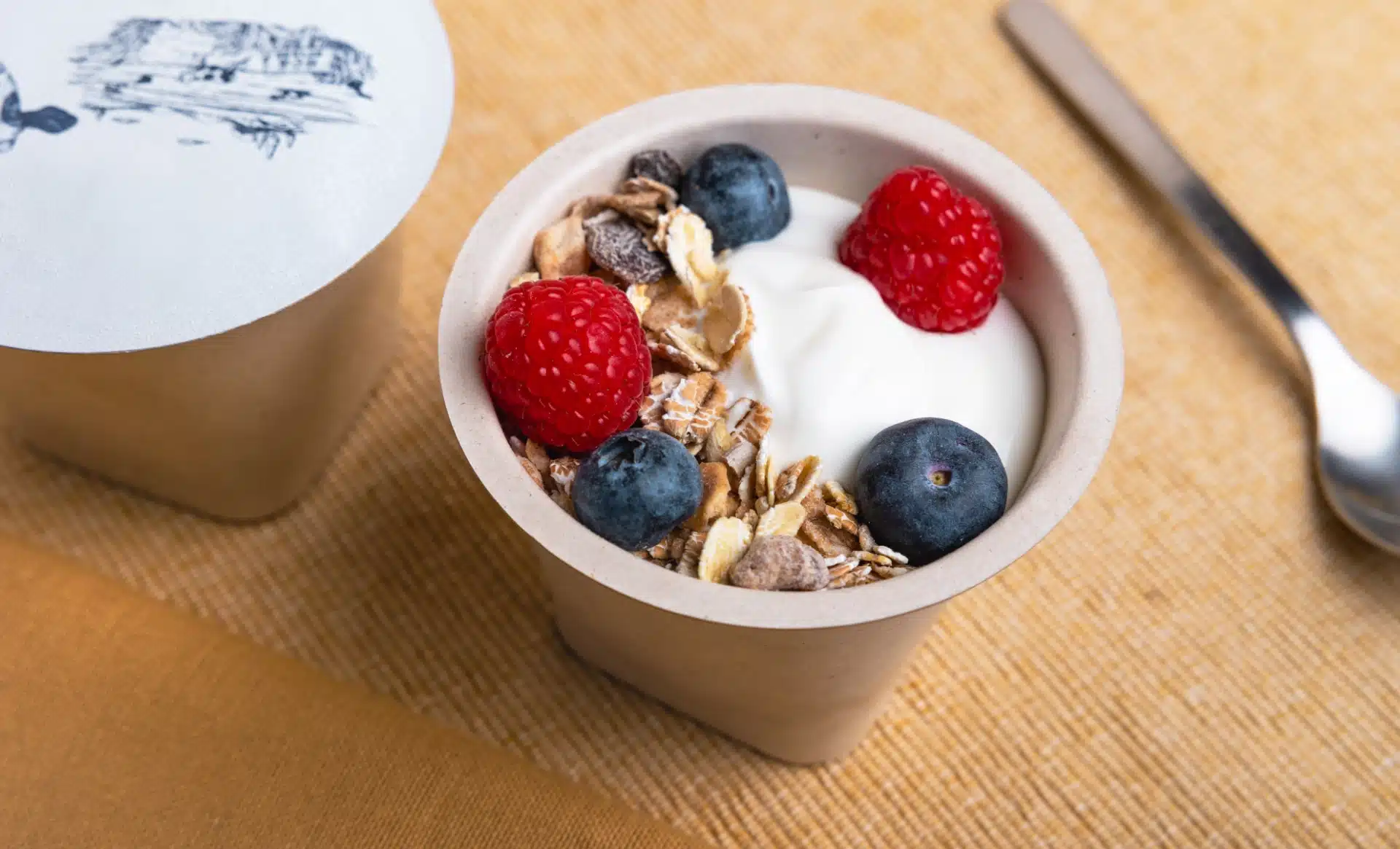
Food safety is the third pillar. Molded fiber made from virgin or well-screened recycled materials and food-grade chemistry can meet EU and FDA food-contact rules when manufacturers follow the right controls. Suppliers already offer bagasse plates, molded pulp trays, clamshell formats and bowls for hot and cold food that carry industrial or home composting certifications. Fiber-based formats therefore make a strong candidate when you want eco-friendly packaging that is safe in both direct and indirect food or cosmetics contact, instead of relying on plastic-heavy packaging products.
In recent Intrecore projects, switching from plastic inserts to dry-pressed fiber reduce packaging-related CO₂ emissions by around 60.99% on average. That kind of hard data reassures sustainability teams that molded fiber is not only a nicer story on the box, but a measurable step toward corporate climate targets.
Design toolkit:
custom molded fiber inserts, embossing, colors and coatings
Once the basics are clear, the fun work starts: designing custom molded fiber packaging that actually feels like your brand. Structurally, you work with your supplier’s design engineers on a 3D model that matches your packaging needs – device nests, bottle holders, accessories, applicators or refills. Custom molded pulp inserts, molded pulp trays and other packaging products grip each item, keep everything stackable during transportation and storage, and drop neatly into an outer shipper made from corrugate or other paper packaging. Internally, many teams joke about this as “Molded pulp inserts for every occassion”, but that level of SKU-specific thinking turns generic cushioning into a tight, efficient system.
Visual branding happens on the surfaces customers actually see. With wet-press and thermoformed molded fiber packaging you can build in embossing and debossing for logos and patterns, fine textures that feel closer to soft-touch board than to an egg tray, clever cut-outs for cards or cables, and tray or clamshell geometry that echoes your product forms. Together, those details turn a neutral fiber base into a clearly eco-conscious expression of your identity.
Color and coating choices connect premium feel with sustainability. Natural off-white or straw tones immediately signal environmentally aware intent. Soft whites and tinted neutrals can push the look into spa-grade beauty or clean-tech electronics territory. Water-based barrier layers add moisture or oil resistance while still allowing the piece to be recycled or composted and avoiding PFAS and heavy plastics.
In briefs, technical specs and market research you’ll often see this summarised with phrases like “custom molded fiber packaging” with customization for colors, coatings and premium unboxing, or “custom molded pulp packaging” focused on branding in electronics custom design branding projects. These are just shorthand for one idea: innovative packaging solutions that elevate the experience and keep the material story credible.
Premium unboxing and brand storytelling
with branded molded fiber packaging
A strong unboxing experience turns your pack from a cost line into a brand storytelling channel. With branded molded fiber you can choreograph how someone moves through each step of the packaging journey.
Beauty & cosmetics: A thermoformed fiber tray holds bottles and jars in a tight grid. The first thing your customer sees is a clean, matte surface with your logo subtly embossed in the centre. Under the tray, a second insert reveals samples or a card with the brand narrative, written in the same tone you use on pack and online. Fiber-based formats here feel like eco-luxury rather than compromise and reinforce an eco-conscious brand image.

Retail gift sets: On shelf, retail packaging has seconds to communicate “premium + sustainable”. A molded pulp tray inside a printed board sleeve keeps products aligned in-store and safe for e-commerce shipments. Natural fiber colour, maybe with a soft tint, immediately signals friendly packaging that isn’t dominated by plastic. Category managers also like that the tooling and production windows fit standard private-label timelines, so switching from foam to fiber doesn’t put seasonal launches at risk.
Electronics: Custom molded pulp packaging tailored for devices gives the main product a precise nest and organises cables, chargers and accessories in one clean layout. In many projects this molded pulp packaging for electronics has fully replaced EPS end caps while keeping a premium, tech-ready unboxing feel.
Because the material choice is visibly sustainable, every touchpoint reinforces your positioning. You can literally mold your values into the pack: a short message about reducing waste under the lid, a line about the fiber being compostable and recyclable, or a symbol linking the tray back to sugarcane bagasse or bamboo. Done well, molded fiber feels like High Performance Green Packaging – precise, soft to the touch and clearly premium – a natural fit for sustainable packaging across beauty, retail and electronics, not just a brown transport shell.
Making the switch:
from plastic to custom molded fiber packaging at scale
Moving from plastic foams to custom molded pulp packaging isn’t just a material swap. It touches sourcing, operations and brand strategy. Most teams follow a simple roadmap.
- Define the use case
Start with one or two strategic SKUs: a hero beauty set, a device kit, a refill program or an online-only bundle. Map the packaging applications you care about most, the drops and vibration levels you need to survive, and which ISTA or retailer tests you must pass. That clarity makes the rest of the work much faster. - Co-design with your partner
Intrecore and other specialists design and manufacture fiber components using a cross-functional design team and experienced design engineers. Together you refine the structural design, fit and nesting, review 3D models and samples, and agree realistic time estimates for tooling and ramp-up.
Because production and tooling are based in the EU, packaging teams don’t have to rely on long, fragile supply chains. Intrecore’s plants are regularly audited by global beauty and electronics brands, and every project ships with a full QA/QC documentation pack – from material specs and food-contact declarations to ISTA test reports and certificates of conformity. - Pilot and validate
Next, you run ISTA transit tests, line trials and consumer checks on the new set-up. The goal is simple: protect your products during shipping and storage, keep the unboxing experience on-brand, and make sure packing operations still run smoothly. - Scale with MOQs
Finally, you align on minimum order quantity (MOQ), lead times and freight. For high-volume SKUs, molded fiber can be a cost-effective, stackable and light packaging material, reducing shipping costs and simplifying warehousing compared with heavier foam assemblies.
Across Europe – and increasingly across North America – brands now look for partners that offer custom molded pulp packaging based on plant fibers and, where relevant, made from recycled paper or blended recycled materials. These vendors help global teams replace plastic where it matters most without sacrificing performance or aesthetics, and they keep projects aligned with tightening regulations and long-term sustainability goals.
Plan your switch from plastic to molded fiber
Need to hit retailer sustainability targets without risking launch timelines?
Let’s map a practical roadmap from foam to fiber for your key SKUs – with clear costs, lead times and test plans.