

Microplastics and Nanoplastics in Food Packaging:
A Practical Guide for Food and Retail Packaging Teams
This guide looks at microplastics and nanoplastics in food packaging from the perspective of dairy and chilled packaging leads and EU private-label category managers. You’ll see how microplastics in food arise across the value chain, where packaging and kitchenware add to the load, and what current health and regulatory signals mean for your roadmap. We’ll map the microplastic hotspots in a typical portfolio, explore design strategies to reduce them, and show how fibre – especially wet molded pulp – can help you move away from plastic-heavy packs in a commercially realistic way.
On this page:
From a Kitchen Full of Microplastics to the Packaging Brief
Most people first meet microplastics in the headlines: tiny plastic particles found in bottled water, table salt, fresh produce, even human blood and organs. But zoom in on a normal home and it gets very tangible very fast. Cutting meat on a plastic chopping board, reheating food in a plastic container, grabbing a takeaway in a hot, sealed plastic box – each step can shed microplastics or nanoplastics into what ends up on the plate.
A modelling study across 109 countries estimated that combined airborne and dietary uptake of microplastics increased more than six-fold between 1990 and 2018, driven by rising plastic production and poor waste management.
Source: Microplastic Human Dietary Uptake from 1990 to 2018, Environmental Science & Technology, 2024
From a consumer’s perspective this feels overwhelming. Microplastics and food are now tightly linked through soils, water, animal feed, food processing and food contact materials. No single change will “switch off” exposure. But as a packaging or retail decision-maker, you do control one critical lever: the type of plastic, fibre or hybrid structures you choose for your food packaging, and the way those packs are used, heated and handled.
What Microplastics Are
– and How They End Up in Everyday Food and Drink
Microplastics are usually defined as solid plastic particles smaller than 5 mm; even tinier fragments down to the nanometre range are often called nanoplastics. They can be “primary” (manufactured that small) or “secondary” – created when larger plastics such as films, trays, bottles or kitchenware crack, abrade and fragment. For anyone working with food contact materials, the key point is simple: any plastic surface that comes into contact with food and beverages can shed microplastics over time, especially under heat, fat, salt or friction.
Microplastics and nanoplastics in food do not start in the kitchen; they arrive there via the wider environment. A review of micro- and nanoplastics in food found that exposure can come from meat, grains, fruit and vegetables, fish and shellfish, as well as tap and bottled water, sugar, honey, milk, salt and other beverages – with the mix depending heavily on local diets.
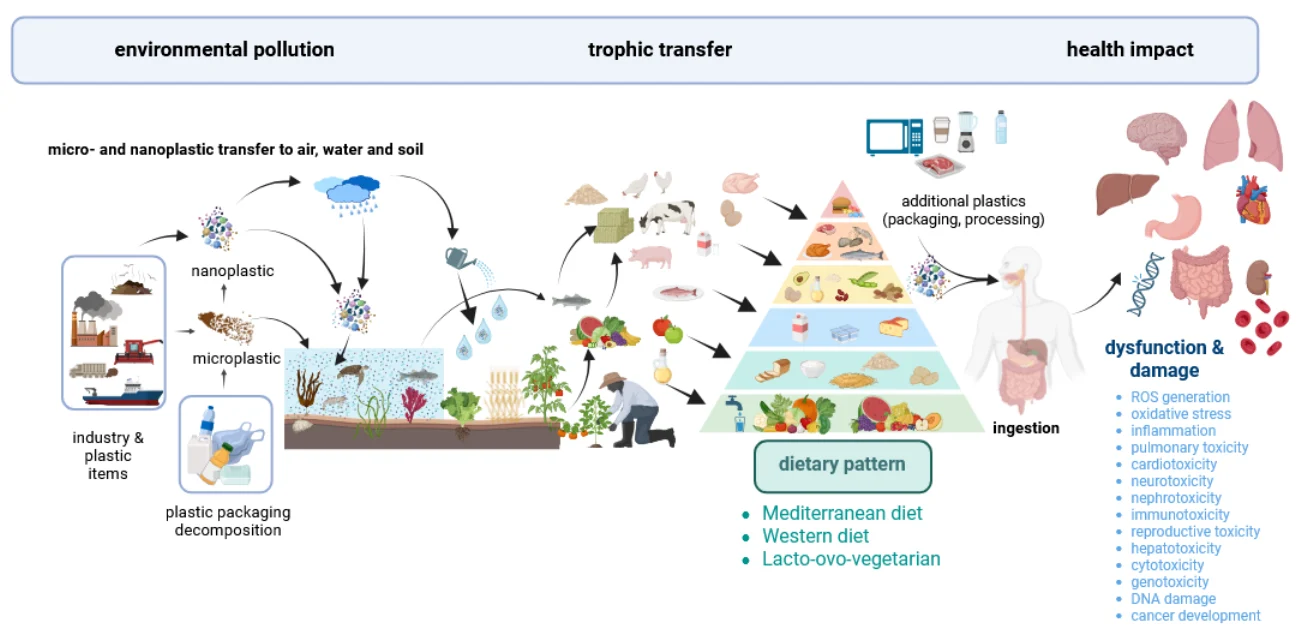
Some staples show how pervasive microplastic contamination has become. Table salt is a good example: a global review combining several studies on commercial salts found that around 94% of products tested contained microplastics, and in one dataset 36 out of 39 salt brands were contaminated, especially sea salt.
Source: Microplastic contamination of table salts from Taiwan, including a global review, Scientific Reports, 2019
In other words, even before your product touches a tray, lid or film, ingredients may already carry a baseline microplastic load. That’s exactly why design choices in food packaging matter: you can’t remove what’s already present in food, but you can avoid adding new fragments of plastic on top.
Where Food Packaging and Kitchenware Add
to the Microplastic Load
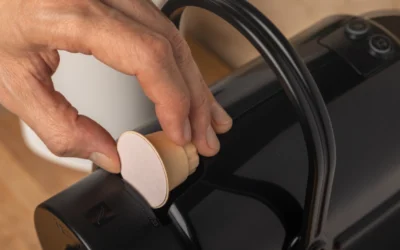
Source: Microplastic release from bottled water caps, Journal of Hazardous Materials, 2021
Studies of plastic food packaging and plastic food containers show that even reusable plastic containers and plastic cups can shed microplastics when they handle plastic tasks such as storing hot soups, sauces or coffee. Bottled water and ready-to-drink beverages stored in plastic bottles are all examples where microplastics from packaging may migrate into the drink long before anyone opens it.
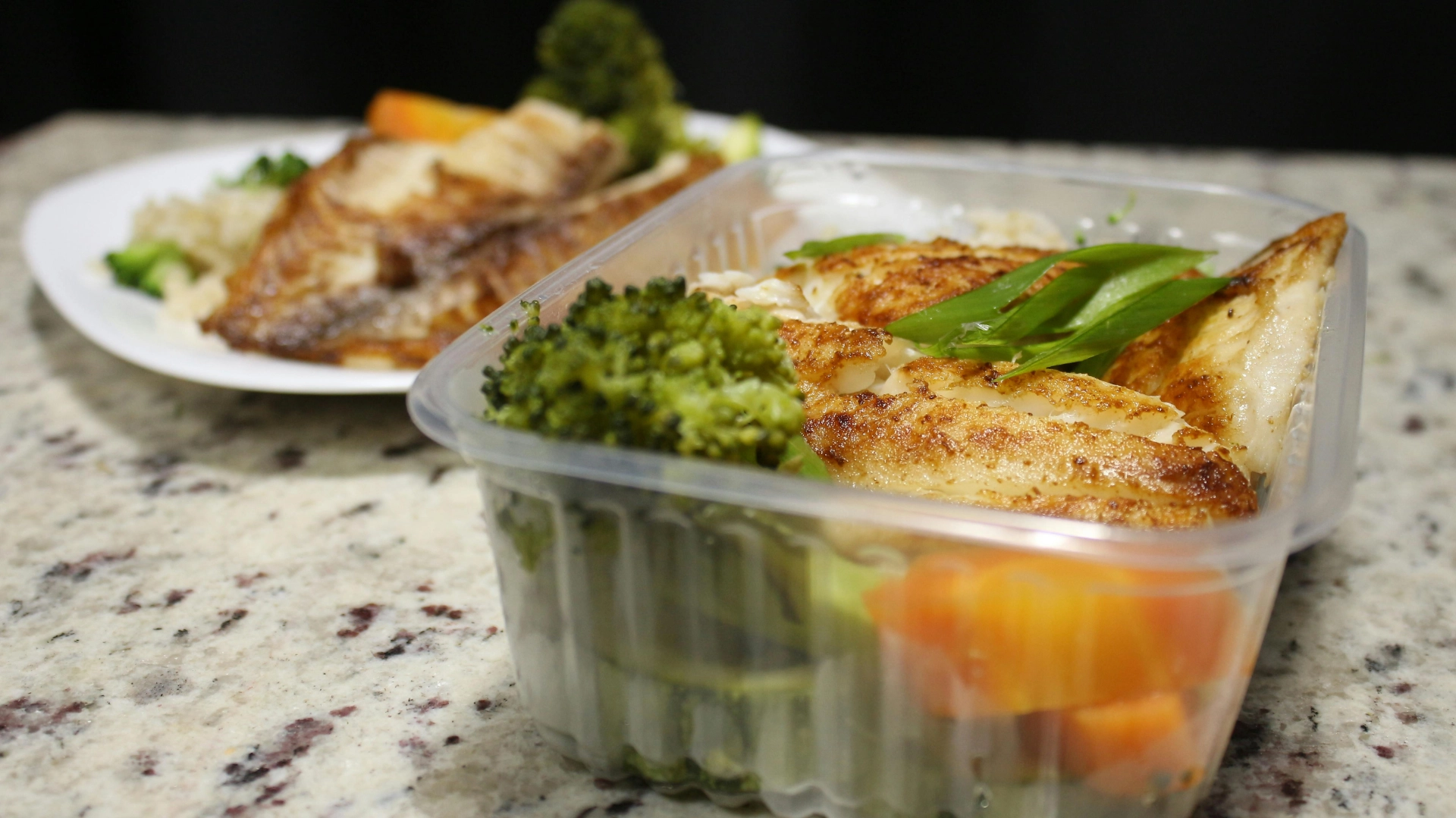
Takeaway containers are another clear source. One study found that consumers who order takeaway 5–10 times a month might ingest between 145 and 5,520 microplastic particles from the containers alone. And when “microwave-safe” plastic containers are actually microwaved, some can release up to 4.22 million microplastic and 2.11 billion nanoplastic particles per square centimetre of plastic within three minutes.
Sources:
https://pubmed.ncbi.nlm.nih.gov/37343248/
https://pubmed.ncbi.nlm.nih.gov/37220346/
In the home, coated non-stick pans, plastic mixing bowls, blenders and synthetic sponges have all been shown to shed microplastics under normal use. Consumers can influence some of this, but not all. Food brands and retailers have a clearer lever: choose and design food packaging formats that don’t rely on high-stress plastic contact for heating, storage and serving in the first place.

Health and Regulatory Signals:
Why Packaging Decisions Suddenly Matter More
Nobody yet has a complete picture of the impacts on human health. But the pieces we do have aren’t exactly comforting. In 2024, a study of patients undergoing carotid surgery found microplastics embedded in some neck-artery plaques. Over the next three years, the people with plastic in their arterial plaque were about 4.5 times more likely to suffer a heart attack, stroke or die than those without detectable plastics.
From a human health perspective, this goes beyond brand perception. Microplastics and nanoplastics from plastic packaging, food processing equipment and other plastic components are a potential human health concern because they can accumulate in tissues and may interact with sensitive organs. Current research shows possible health effects ranging from subtle changes in inflammation markers to broader health and environmental impacts, but researchers agree that more research is needed to understand the full health risks and long-term effects.
Regulators are paying attention. EFSA has confirmed that food-contact materials can release micro- and nanoplastics during normal use and has been tasked with delivering a full health-risk assessment for microplastics in food, water and air by 2027. For packaging teams, the signal is simple: don’t wait for a formal limit value before you start designing exposure to microplastics down.
Sources:
https://www.ahajournals.org/doi/10.1161/CIRCULATIONAHA.124.069801
https://www.efsa.europa.eu/en/news/microplastics-european-parliament-requests-scientific-advice-efsa
Microplastic Hotspots in Your Current Food Packaging Portfolio
If you mapped your range by heat, fat and contact time, a few predictable microplastic hotspots would jump out. Reheat-in-pack trays, lidded cups for hot drinks, and ready meals that go straight from fridge to microwave all combine elevated temperature with direct plastic contact. High-fat products stored for long periods in plastic tubs or films are another risk zone, as fat can accelerate both particle release and chemical migration.
Then there are friction points: bottle caps and closures that are opened and closed repeatedly, spouts and flip-tops, plastic-lined cans and composite packs where layers flex against each other.
For chilled and dairy teams, think about grated-cheese bags, yoghurt pots with lids designed for resealing, or snack packs that consumers open and close many times. None of these formats are “bad” by default – but they are strong candidates for redesign if you want to cut your contribution to microplastics from food packaging without rewriting your whole strategy overnight.
Design Strategies to Reduce Microplastics in Food Packaging
The first rule is simple: less stressed plastic, less plastic in food. In practice that means avoiding roles where plastics have to cope with extreme swings (freezer to microwave), aggressive combinations of salt, fat, acid and heat, or heavy mechanical stress. Where possible, move reheating out of primary packs and into glass containers, metal or ceramic, and make that behaviour obvious through copy and icons – otherwise people will still microwave the pack in their hand.
Next, simplify. Fewer layers and more robust single materials are usually better than complex multi-layer structures that flex, crease and crack along interfaces. Design to reduce opening and closing events (for example by using portionable multi-packs rather than one large resealable pack) and pay attention to easy-to-tear features that don’t shred plastic into fine fragments. Finally, treat microplastics released from packaging and recyclability as two sides of the same coin: if you can move towards mono-material, fibre-first solutions that still meet performance specs, you usually win on both fronts.
PPWR background: https://environment.ec.europa.eu/topics/waste-and-recycling/packaging-waste/packaging-packaging-waste-regulation_en
Why Wet Molded Pulp Is a Credible Route Away
from Plastic-Heavy Packs
Fibre isn’t a miracle cure, but it does fix one very specific problem: it lets you remove whole chunks of stressed plastic from direct food contact. Wet molded pulp trays and inserts take jobs that were traditionally done by rigid plastics – ready-meal trays, produce trays, bakery inserts, some dairy and confectionery formats – and shift them into shaped fibre. Instead of building the entire structure out of plastic and then asking it to survive filling, transport, fridge, possibly microwave and disposal, you rely on fibre for strength and shape, and use only the coatings or films you truly need for barrier.
From a regulatory angle, that aligns neatly with Europe’s new Packaging and Packaging Waste Regulation (PPWR), which requires all packaging on the EU market to be reusable or recyclable by 2030, with stricter design-for-recycling rules and modulated EPR fees. Fibre-based mono-material packs tend to score better in recyclability assessments than complex multi-material plastics, and they sit comfortably inside retailer “less plastic, more fibre” narratives. For dairy & chilled packaging leads and private-label managers, the mindset shift is important: treat wet molded pulp not as a “nice eco look”, but as an engineering platform you can qualify just as rigorously as any plastic tray – barrier first, aesthetics second.

Next Steps for Food & Retail Packaging Teams
– and How to Help Consumers Eat Less Plastic
You don’t need a manifesto to start; you need a shortlist. Take your range and circle the packs that combine plastic with high heat, long storage, high fat or lots of opening and closing. Layer on where PPWR or retailer targets are already putting pressure on you, and where a sustainability story really moves the needle with shoppers or buyers. That shortlist becomes your first microplastics roadmap.
From there, pick a few pilot projects instead of trying to fix everything at once. For each candidate SKU, compare a “do nothing” option with a lower-plastic alternative – for example, moving the tray or insert into wet molded pulp while keeping existing lidding films and machinery wherever possible. Measure everything that matters: barrier, shelf life, line efficiency, damage rates, recyclability assessment, customer feedback. Each successful trial becomes another page in your internal playbook for when and how fibre can safely replace plastic.
Ready to help your customers eat less plastic?
Together we can explore where fibre and wet molded pulp can replace plastic without risking line speed, shelf life or margin.
Explore more related content
Eco packaging certifications that prove your packaging is truly sustainable
Eco packaging certifications that prove your packaging is truly sustainableIf you’re responsible for packaging, you’re surrounded by claims:...
Water-Resistant Molded Fiber: Can It Really Replace Plastic in Wet & Greasy Packaging?
Water-Resistant Molded Fiber: Can It Really Replace Plastic in Wet & Greasy Packaging?Buyers love the idea of molded fiber packaging – it’s...
Switching to eco-friendly packaging: how to move from plastic to fiber without disrupting your lines
Switching to eco-friendly packaging:how to move from plastic to fiber without disrupting your linesSustainable packaging has become a board-level...